We talk a lot about the outcomes we want in agriculture: healthier soils, stronger yields, better crop quality and more resilient production systems.
But lately, I’ve been thinking about a different question:
What is the work required to actually get us there?
In my latest article for Spud Smart, I explore the idea of functional efficiency — looking beyond the end result of a crop and considering how efficiently the entire production system is working along the way.
Every potato field receives energy from the sun. Yet two fields with similar sunlight and rainfall can produce very different crops. The difference is what happens to that energy once it enters the system.
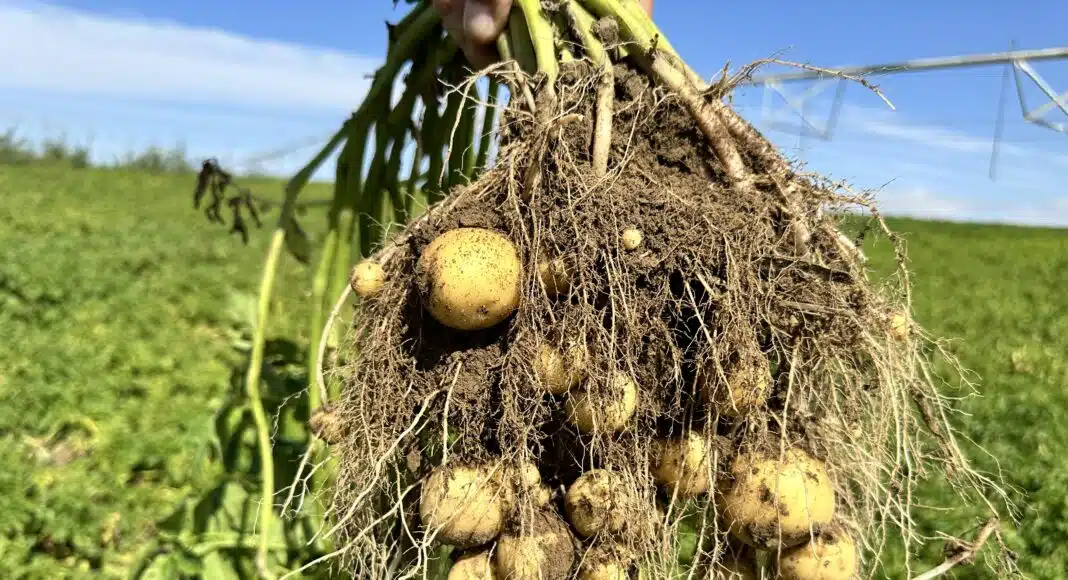
In a healthy, functioning soil, plants can put more of that available energy to productive use. Strong root systems, active soil biology and effective nutrient cycling all help the crop capture resources and convert them into growth.
But when a field is fighting disease pressure, compaction, poor root development or other soil challenges, some of that productive potential gets lost. The crop has to work harder, and growers may have to compensate with additional inputs and intervention.
That’s why simply measuring the outcome at harvest doesn’t always tell us enough.
Two growers might arrive at similar yields while taking very different paths to get there. One production system may require considerably more water, fertilizer, fuel or crop protection to achieve the same result. If our goal is truly more sustainable and resilient potato production, how efficiently we reach the destination matters, too.
For me, that’s where the conversation around soil health gets especially interesting.
Instead of asking only, “Did we increase yield?” or “Did we improve soil health?” we should also be asking:
Did we improve the soil’s ability to do productive work?
The more efficiently our soil and plants can use the energy and resources already available to them, the more opportunity we have to build a productive, resilient farming system.
Harvest tells us where we ended up.
Understanding the work beneath it may tell us how to get there better.
Read my full article, “The Work Beneath the Harvest,” on Spud Smart: https://spudsmart.com/the-work-beneath-the-harvest/